A solid accounting foundation does more than keep books balanced. It uncovers cash-flow trends, spots buried risks and powers smarter decisions. For high-touch advisory clients, mastering best accounting practices for small businesses means fewer surprises at tax time and more runway for growth.
In this concise guide you’ll find the top 10 best accounting practices for small businesses — with actionable steps, software recommendations and real-world examples. No fluffy theory here: each item delivers clear workflows and implementation tips you can adopt today.
Whether you run a family office, manage properties in New York or steer a nonprofit, these practices build the financial clarity you need to stay audit-ready and scale confidently. Expect scenario-based insights tailored to real estate investors, self-employed professionals and closely held enterprises.
By following these steps you’ll be able to:
- Separate business and personal finances with easy-to-maintain banking routines
- Implement consistent bookkeeping systems using a clear chart of accounts
- Automate invoicing and payments with trusted software like QuickBooks or Xero
- Reconcile accounts monthly to catch errors before they snowball
- Forecast cash flow with rolling 13-week templates
- Plan for taxes strategically to optimize quarterly estimates
Each bullet reflects a pillar of the best accounting practices for small businesses, backed by sample journal entries, reconciliation checklists and workflow screenshots. Ready to cut hours off your month-end close and keep stakeholders happy? Let’s dive in.
1. Separate Business and Personal Finances
Keeping your personal and business finances completely separate is a cornerstone of sound bookkeeping and one of the best accounting practices for small businesses. By using dedicated bank accounts and credit cards for each activity, you eliminate confusion, support liability protection, and speed up tax prep.

How It Works
- Open a business checking account to channel all revenue and expenses.
- Assign a business credit card for purchases, never mix personal charges.
- Log personal draws or salary via automated transfers from the business account.
Real-world Examples
- Sarah’s boutique opened a dedicated business checking account at her local bank, cutting expense reconciliation time in half.
- A tech startup keeps its founder’s personal credit card separate, making VC and payroll audits straightforward.
- Freelancers using a PayPal business account report 40% faster tax prep thanks to neatly categorized transactions.
Actionable Tips
- Choose a bank with low fees and small business perks like free ACH transfers.
- Set up an automatic monthly transfer for owner’s draw or salary.
- Review all statements monthly, flag any personal charges by the 5th of each month.
- Implement a written policy: no personal purchases on business accounts.
When to Use This Approach
Start separating accounts as soon as you register your business entity.
This practice streamlines loan applications, simplifies audits, and gives you clarity on profit margins in real time.
Separating business and personal finances from day one protects your liability and accelerates accurate reporting. Learn more about best accounting practices for small businesses at https://outrank.so.
2. Implement Consistent Bookkeeping Systems
Establishing and maintaining a consistent bookkeeping system means capturing every financial event the same way each time. This builds a reliable audit trail, supports regulatory compliance, and unlocks clear business insights. You can choose manual ledgers, spreadsheets, or accounting software like QuickBooks or Xero – consistency remains the star of the show.
How It Works
- Define a tailored chart of accounts so every transaction lands in the right bucket.
- Schedule fixed days each week for data entry, reconciliations, and categorization.
- Apply consistent naming conventions and expense codes across all transactions.
- Reconcile bank, credit card, and merchant accounts within days of statement delivery.
Real-world Examples
- A construction firm that records costs daily achieved a 25% faster month-end close.
- An e-commerce shop using uniform product category codes boosted inventory accuracy by 35%.
- A service business performing weekly bookkeeping saw discrepancies drop by 80%.
Actionable Tips
- Block two hours every Monday and Thursday for transaction entry and review.
- Connect bank and credit card feeds to your accounting software to eliminate manual imports.
- Write a bookkeeping procedures manual with screenshots, naming conventions, and approval workflows.
- Reconcile accounts within three days of statement arrival to spot errors early.
- Hold monthly training sessions for staff on your bookkeeping tools and policies.
When to Use This Approach
Start consistent bookkeeping as soon as you record your first sale or expense. If your month-end closing drags on, transaction categories are all over the place, or you struggle to get real-time insights, it’s time for a standardized process.
Implementing consistent bookkeeping systems is one of the best accounting practices for small businesses, laying the groundwork for accurate reporting, proactive tax planning, and confident financial decisions. Learn more at https://outrank.so.
3. Use Accounting Software and Automation
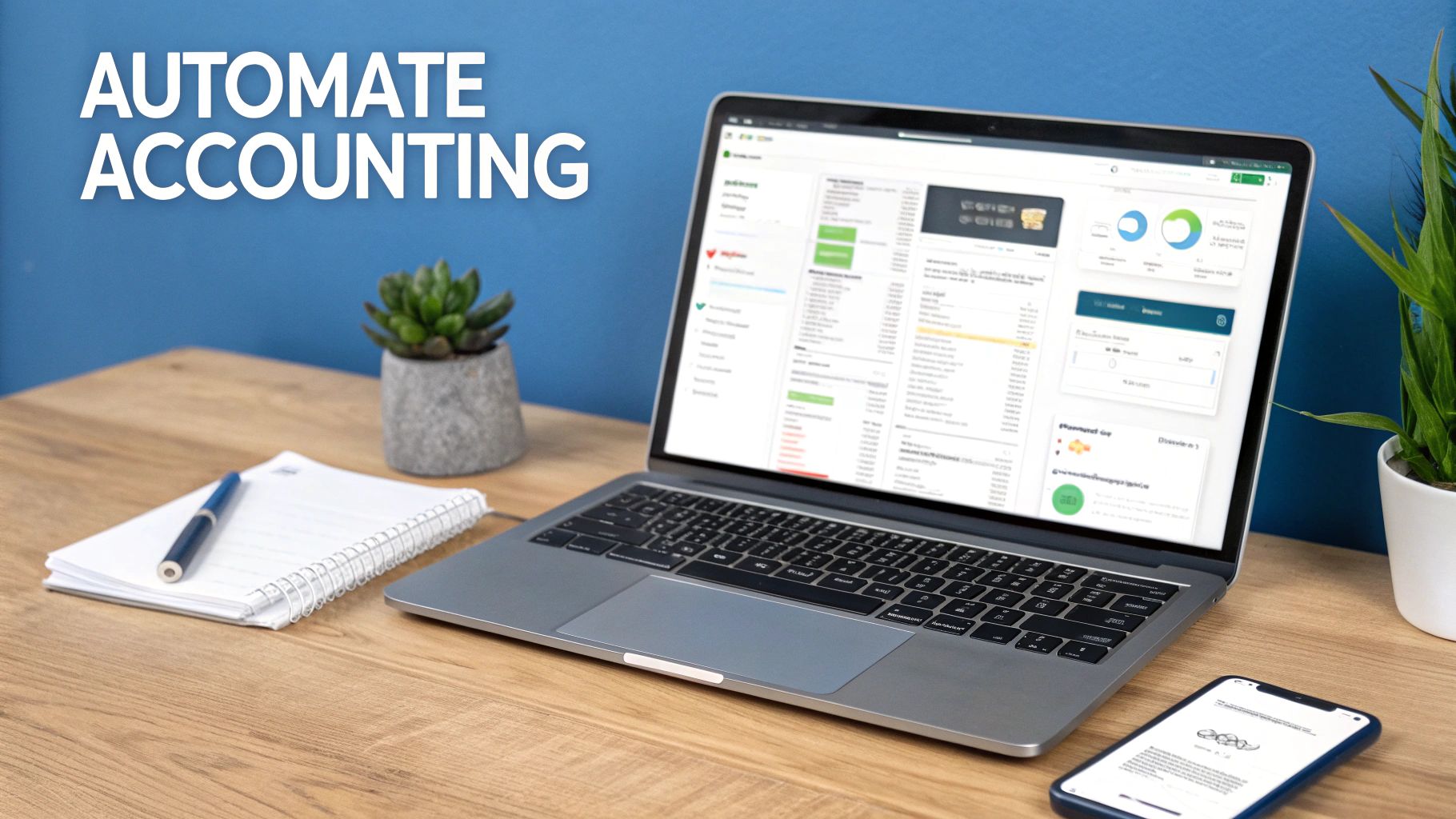
Modern cloud-based solutions and automation tools streamline your financial operations by reducing manual errors and saving hours each week. These platforms give you real-time insights, let you collaborate with your accountant remotely, and scale as your business grows. They also centralize data for compliant reporting and faster year-end projections.
How It Works
- Choose a cloud-based platform that matches your business model and transaction volume.
- Connect bank accounts and payment processors for automatic transaction imports.
- Configure workflows for invoice generation, payment reminders, and expense approvals.
- Leverage dashboards for KPIs like cash flow, margins, and expense trends in real time.
Real-world Examples
- Retailers using Shopify integration cut manual reconciliation time by 50%.
- Service providers on Wave Accounting saw billing errors drop by 90%.
- Construction firms with project-based software improved profitability analysis on each build.
- Consulting firms using automated time-tracking boosted billing accuracy significantly.
Actionable Tips
- Evaluate features against your business size and growth plans.
- Dedicate time to set up your chart of accounts and custom fields properly.
- Sync your software with all bank and payment platforms to avoid duplicate entries.
- Use built-in reports weekly to flag anomalies or overdue invoices.
- Train staff on core functionality before rolling out new automations.
- Review automation rules quarterly to keep categories and thresholds accurate.
When to Use This Approach
Implement software and automation once you have regular sales and expenses.
This method pays off as transaction volume grows, manual tasks pile up, or ahead of tax season.
It ensures accuracy, frees up your team for strategic work, and supports proactive decision making.
4. Maintain Organized Invoice and Payment Records
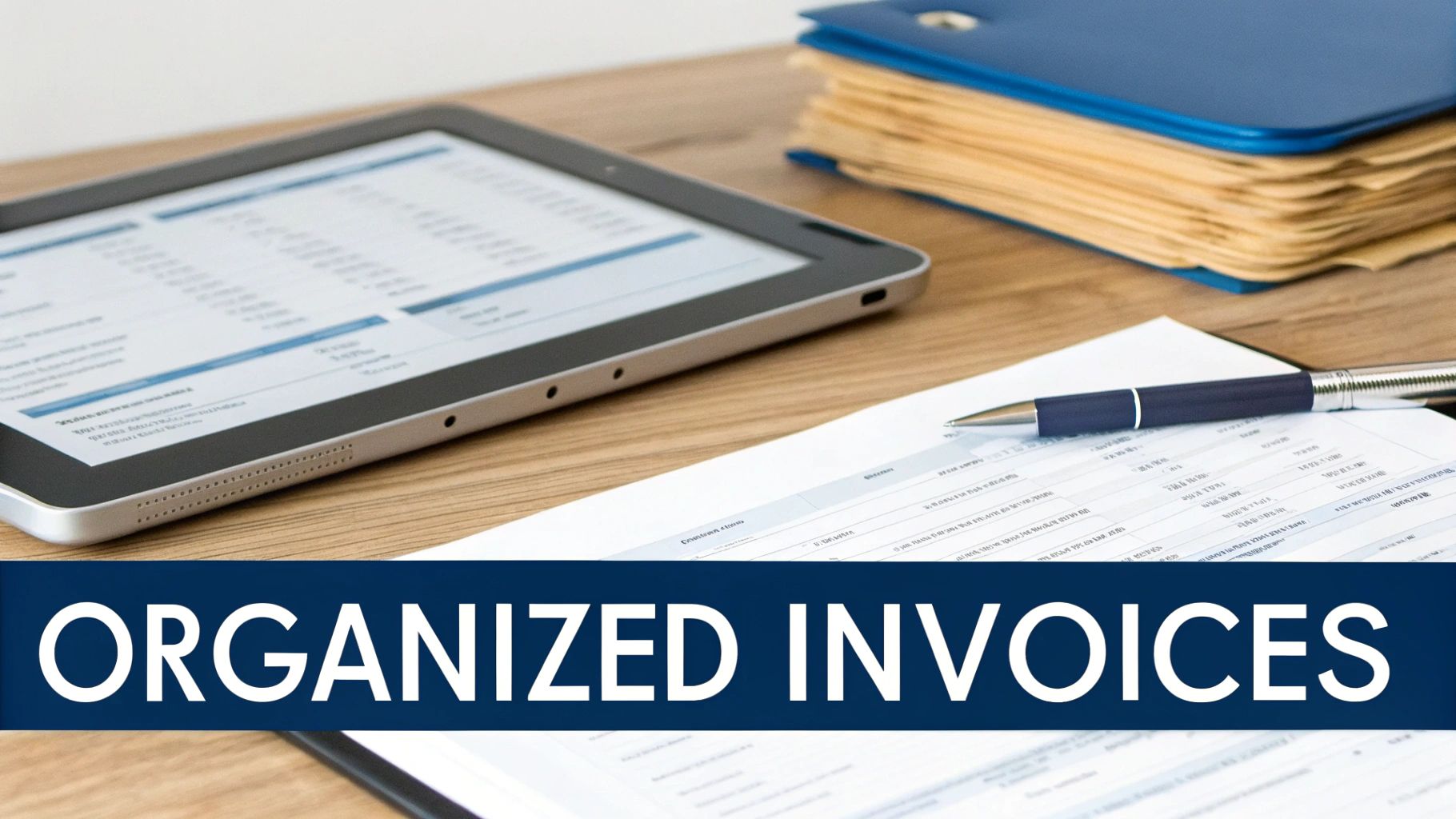
Systematically organizing and tracking all invoices issued and received is a cornerstone of best accounting practices for small businesses. By creating a coherent filing system, you keep your cash flow visible, reduce disputes, and simplify audits and tax planning.
How It Works
- Set up an invoice template that includes sequential numbering, business details, and payment terms.
- Log each invoice immediately when issued or received, using cloud accounting software or a shared spreadsheet.
- Track payment status with tags like “Sent,” “Overdue,” or “Paid” to flag unpaid amounts.
- Build an aging schedule monthly to view outstanding receivables by category (0–30 days, 31–60 days, 61+ days).
Real-world Examples
- A marketing agency implemented a numbered invoice system and slashed payment processing time by 30%.
- A B2B service firm tracked aging receivables in real time and cut Days Sales Outstanding (DSO) by 15 days.
- Freelancers using invoice templates with automatic reminders saw on-time payments jump by 45%.
- A consulting boutique improved cash flow visibility by 60% after digitizing all payment records.
Actionable Tips
- Create an invoice template with your logo, contact info, sequential numbering, and clear net terms.
- Establish and communicate payment terms (net 30, net 60) up front to set expectations.
- Send invoices immediately upon service completion or product delivery to accelerate payment.
- Follow up on unpaid invoices within 5–10 days of the due date using polite, automated reminders.
- Keep digital copies of all invoices and receipts in a centralized folder for easy retrieval.
- Offer a small early-payment discount (1–2%) to incentivize clients to pay sooner.
When to Use This Approach
Start organizing invoices as soon as you issue your first bill. This practice ensures clean books, better cash planning, and fewer write-offs at year end. Learn more about best accounting practices for small businesses at https://outrank.so.
5. Track and Categorize Business Expenses Properly
Systematic tracking and accurate categorization of all business expenses is one of the best accounting practices for small businesses. By documenting each purchase’s purpose, amount, date, and account classification, you unlock better tax deductions, sharper financial analysis, and stronger budget control. This approach transforms scattered receipts into a clear cost picture.
How It Works
- Log every expense immediately with a receipt photo or digital upload.
- Assign each transaction to predefined categories like office supplies, travel, or utilities.
- Use software or spreadsheets with built-in category defaults for consistency.
- Flag unusual or large expenses for accountant review.
- Reconcile expense entries against bank statements monthly.
Real-world Examples
- A retail owner removed $15,000 in redundant subscriptions after reviewing detailed expense logs.
- A home-based consultant claimed an extra 20-30 percent in home office deductions by separating home utilities.
- A contracting firm boosted cost accuracy by 40 percent by tracking equipment and tool expenses in a dedicated category.
- A marketing agency reduced tax filing time by 50 percent by isolating mileage expenses in its books.
Actionable Tips
- Keep all receipts for at least two to three years.
- Use a mobile app to photograph and store receipts digitally on the go.
- Create expense categories that reflect your business structure and IRS rules.
- Review IRS deduction guidelines specific to your industry every quarter.
- Categorize expenses consistently each month to avoid backlog.
- Flag questionable or large bills immediately for external review.
- Implement a monthly expense audit in your calendar.
- Leverage software with expense-tracking templates and automated reminders.
When to Use This Approach
Adopt this practice from day one of operations to ensure clean books and maximize deductions. Consistent tracking and categorization not only streamline your year-end tax prep but also support proactive budgeting and cash-flow forecasting. For more guidance on best accounting practices for small businesses, visit https://outrank.so.
6. Monitor Cash Flow Regularly and Forecast
Keeping a pulse on cash flow is one of the best accounting practices for small businesses because it directly impacts your ability to pay bills, cover payroll, and invest in growth. Unlike profitability metrics, cash flow tells the real-time story of funds moving in and out of your business. By forecasting future inflows and outflows, you can avoid surprises, negotiate better payment terms, and steer clear of costly short-term loans.

How It Works
- Prepare a rolling cash flow projection at least 3–6 months ahead, listing expected receipts and disbursements.
- Update your forecast monthly by comparing actual results to projections, then adjust assumptions.
- Highlight seasonal peaks and troughs so you know when to ramp up collections or delay nonessential spending.
Real-world Examples
- A seasonal retailer avoided a $50,000 loan by trimming inventory orders in low months.
- A consulting firm improved working capital by 35% after tracking cash flow every 30 days.
- A boutique retailer staved off a payroll crisis by securing a credit line well before cash dips.
- A SaaS startup extended its runway by eight months through strict cash monitoring and spending cuts.
Actionable Tips
- Build a monthly cash flow model with separate line items for revenue, COGS, payroll, rent, and taxes.
- Update your forecast within five days of month-end to catch trends early.
- Factor in historical seasonality and industry patterns for more realistic assumptions.
- Flag high-consumption periods like year-end inventory builds or holiday campaigns.
- Maintain a minimum cash reserve equal to 3–6 months of operating expenses.
- Offer early-payment discounts or shorter invoicing terms to accelerate receivables.
- Ask suppliers for extended payment terms when cash is tight.
- Compare your cash flow statement to your profit and loss for root-cause analysis.
- Leverage accounting software with built-in forecasting dashboards.
When to Use This Approach
Implement cash flow monitoring as soon as you start billing clients or ordering inventory. This proactive step keeps you agile, prevents liquidity crunches, and supports strategic growth planning.
7. Establish a Robust Internal Controls System
Creating internal controls and checks and balances is essential for protecting assets and ensuring accurate records. As one of the best accounting practices for small businesses, a solid system prevents fraud, reduces errors, and keeps operations efficient.
How It Works
- Segregate duties so no single person handles an entire transaction cycle.
- Implement approval workflows for invoices, payments, and expense claims.
- Schedule regular reconciliations for cash, receivables, and inventory.
- Conduct periodic audits or spot checks to verify compliance with policies.
Real-world Examples
- A retail shop added a check-signing requirement and detected embezzlement early, saving $8,000.
- A service company set dual approval for expenses over $500 and caught an accounting error worth $3,000.
- A nonprofit with monthly reconciliation procedures identified fraud within two months.
- A manufacturing firm introduced inventory controls and improved accuracy from 87% to 99%.
Actionable Tips
- Start by mapping out high-risk areas like cash, inventory, and receivables.
- Require written approval for all transactions above a defined threshold.
- Never let one person complete both initiation and recording of transactions.
- Reconcile accounts immediately after statements arrive each month.
- Conduct surprise spot audits and cash counts quarterly.
- Document all controls and workflows in an internal policy manual.
- Review user access levels every quarter and train staff on control procedures.
When to Use This Approach
Adopt robust internal controls as soon as your business grows beyond a sole proprietor or adds multiple staff. This system safeguards assets, ensures reliable financial reporting, and builds trust with stakeholders and lenders. Learn more about best accounting practices for small businesses at https://outrank.so.
8. Prepare Accurate Financial Statements and Conduct Regular Reconciliations
Regularly preparing accurate financial statements – income statement, balance sheet, and cash flow statement – and reconciling accounts prevents mistakes from compounding. This is one of the best accounting practices for small businesses because it delivers reliable performance insights and catches errors early.
How It Works
- Generate monthly P&L, balance sheet, and cash flow reports with accounting software.
- Reconcile bank, credit card, and accounts receivable within 5-10 days of month-end.
- Compare actuals to prior periods and budget forecasts to highlight trends.
- Document variances and track key performance indicators (KPIs) like gross margin and operating cash flow.
Real-world Examples
- An e-commerce store reviewed monthly P&Ls, spotted seasonal demand peaks, and optimized inventory levels.
- A consulting firm found working capital shortfalls six months earlier through quarterly balance sheet reviews.
- A restaurant identified high-cost menu items and boosted profitability by 12%.
- A tech startup’s detailed monthly reports convinced investors of viability and raised $2M.
- A small business caught a $2,400 bank error via its reconciliation process.
- A retailer discovered $8,000 in inventory shrinkage during year-end counts.
- A professional services firm corrected a $5,000 billing mistake through A/R reconciliation.
Actionable Tips
- Prepare statements within 2-5 days of month-end close.
- Automate reporting with cloud accounting software.
- Compare statements to budgets and last year’s results.
- Track KPIs and highlight deviations greater than 5%.
- Reconcile all bank and credit card accounts promptly.
- Investigate and document every reconciling item.
- Keep supporting docs for material line items.
- Schedule a quarterly review with your accountant.
When to Use This Approach
Use this practice monthly for active management and at quarter or year-end for deeper analysis. Consistent financial statements and reconciliations ensure accuracy – a critical element of best accounting practices for small businesses. Learn more at https://outrank.so.
9. Manage Payroll Accurately and Compliantly
Proper payroll management ensures employees are paid correctly and on time while meeting tax obligations and labor law requirements—a vital part of the best accounting practices for small businesses. From calculating gross pay and withholdings to filing returns, accurate payroll keeps your team happy and your business compliant.
How It Works
- Calculate gross wages, overtime, bonuses and commissions using time-tracking or salary data.
- Deduct employee withholdings (federal, state, local taxes, benefits premiums) and employer payroll taxes.
- File payroll tax returns (Form 941, state unemployment) and remit liabilities by due dates.
Real-world Examples
- A bakery switched to cloud payroll software and cut processing time from 4 hours to 30 minutes each month.
- A design firm outsourced payroll and eliminated $12,000 in back tax penalties within one year.
- A multi-state retailer centralized payroll in one platform, ensuring correct tax rates and filings in every jurisdiction.
- A tech startup implementing in-house payroll from day one avoided over $5,000 in late-filing penalties.
Actionable Tips
- Choose reputable payroll software or outsource to a certified provider.
- Maintain accurate, up-to-date employee records (W-4, I-9, direct deposit details).
- Review payroll calculations and liability reports before each run.
- Track and reconcile payroll liabilities until payments clear.
- Stay informed on federal and state tax law changes via IRS newsletters or professional advisors.
When to Use This Approach
Start formalizing payroll processes as soon as you hire your first employee or contractor. Accurate, consistent payroll minimizes risk of audits, penalties and employee dissatisfaction. Whether you’re a growing startup, a multi-state employer or a small family business, precise payroll management scales with your headcount and safeguards compliance.
Implementing robust payroll workflows is one of the best accounting practices for small businesses, driving efficiency and protecting your bottom line. Learn more at https://outrank.so.
10. Plan for and Manage Business Taxes Strategically
Proactive tax planning throughout the year ensures small businesses maximize deductions, minimize tax liability, and meet compliance requirements. By mapping out your tax obligations early, you avoid surprises and penalties while aligning with best accounting practices for small businesses.
How It Works
- Analyze your business structure (LLC, S-corp, C-corp) to pinpoint optimal tax treatment.
- Calculate quarterly estimated payments based on projected income.
- Track all deductible expenses—supplies, home office, retirement contributions.
- Maintain a dedicated tax documentation system for receipts and 1099s.
- Review potential credits (R&D, ERC) to lower your overall bill.
Real-world Examples
- A service business electing S-corp status reduced self-employment taxes by $8,000 annually.
- A freelancer exploiting home office deductions increased write-offs by $3,600.
- A retail shop contributing to a SEP-IRA trimmed taxable income by $25,000.
- A contractor making timely quarterly payments avoided over $5,000 in IRS penalties.
Actionable Tips
- Schedule a year-end meeting with your CPA to map out a tax strategy.
- Review and adjust your legal structure annually for optimal tax benefits.
- Build a dedicated folder or use software for all tax documents and receipts.
- Set calendar reminders for quarterly due dates to prevent late fees.
- Submit estimated tax payments on time to avoid penalties.
- Learn industry-specific deductions you qualify for.
- Save all receipts and mileage logs for audit support.
- Research and claim available federal or state tax credits.
- Analyze prior year returns to uncover new planning opportunities.
- Consider tax-advantaged structures as your revenue grows.
When to Use This Approach
Begin strategic tax planning as soon as you register your business entity. This proactive method keeps you compliant, avoids penalties, and unlocks savings that fuel growth.
Learn more about best accounting practices for small businesses at https://outrank.so.
Top 10 Small-Business Accounting Practices Comparison
| Item | 🔄 Implementation complexity | ⚡ Resource requirements | 📊 Expected outcomes | 💡 Ideal use cases | ⭐ Key advantages |
|---|---|---|---|---|---|
| Separate Business and Personal Finances | Low–Moderate — simple setup, requires ongoing discipline | Minimal: additional bank accounts, possible fees, some bookkeeping time | Clear tax records, easier audits, improved cash-flow visibility | Small businesses, freelancers, startups | Legal liability separation; simpler taxes; reduced errors |
| Implement Consistent Bookkeeping Systems | Moderate — initial setup + routine maintenance | Time or staff commitment; optional accounting software | Accurate financial reports; faster month-end close; fraud detection | Growing businesses, service firms, recurring transactions | Reliable data for decisions; audit readiness; better forecasting |
| Use Accounting Software and Automation | Moderate — configuration and training required | Subscription costs, internet access, integration effort | Significant time savings; real-time dashboards; fewer errors | E-commerce, multi-user teams, scaling businesses | Efficiency; scalability; automated reconciliation and reporting |
| Maintain Organized Invoice and Payment Records | Low–Moderate — ongoing tracking and follow-up | Invoicing tools or software; time for collections | Improved cash flow; reduced DSO; fewer disputes | B2B, agencies, freelancers, subscription services | Faster collections; professional image; clearer receivables |
| Track and Categorize Business Expenses Properly | Moderate — requires consistent rules and discipline | Receipt management tools, software, occasional CPA guidance | Maximized deductions; accurate P&L; better budget control | Expense-heavy businesses, contractors, owners claiming deductions | Tax savings; clearer cost structure; simplified audits |
| Monitor Cash Flow Regularly and Forecast | Moderate–High — requires forecasting skills and updates | Reliable financial data, forecasting tools, time to review | Early shortfall detection; optimized timing of spend/investment | Seasonal businesses, startups, high-burn firms | Avoid insolvency; better vendor/payment negotiation; runway planning |
| Establish a Robust Internal Controls System | High — policy design, segregation of duties, training | Staff roles, control procedures, potential tech or audits | Fraud prevention; timely error detection; stronger accountability | Cash-handling businesses, nonprofits, larger SMBs | Reduced fraud/theft; improved accuracy; stakeholder confidence |
| Prepare Accurate Financial Statements & Reconciliations | Moderate–High — depends on transaction volume and complexity | Accounting staff or software, accountant review, reconciliation time | Reliable performance insights; audit readiness; informed decisions | Lender/investor-facing firms, growing companies | Credibility with stakeholders; timely management information |
| Manage Payroll Accurately and Compliantly | High — payroll taxes and multi-jurisdiction rules add complexity | Payroll software or provider, HR data, time for filings | On-time pay, tax compliance, reduced penalties | Any employer, especially multi-state or rapid-hiring firms | Employee satisfaction; legal compliance; reduced payroll risk |
| Plan for and Manage Business Taxes Strategically | High — ongoing planning, tax-code knowledge required | CPA/tax advisor, thorough recordkeeping, time for planning | Lower tax liability, fewer penalties, improved cash flow timing | Profitable businesses, those with complex deductions or elections | Optimized tax position; cash-flow benefits; reduced audit risk |
Putting It All Together: Your Action Checklist
Quick Recap of Your Accounting Roadmap
You now have a clear guide to the best accounting practices for small businesses. From separating personal and business accounts to strategic tax planning, each step fortifies your financial operations.
- Separate Finances
Keep bank accounts and credit cards distinct for liability protection and cleaner audits. - Standardized Bookkeeping
Adopt a consistent chart of accounts and workflow for every transaction. - Software & Automation
Use tools like QuickBooks or Xero with bank feeds and auto-categorization. - Expense & Invoice Management
Track bills, receipts, and customer payments in real time. - Cash Flow Monitoring
Maintain rolling 90-day forecasts and weekly balance checks. - Internal Controls
Implement approval limits, access restrictions, and surprise audits.
Action Steps to Transform Your Processes
- Schedule a kickoff call with your accountant or advisor this week.
- Set up or refine your chart of accounts by industry needs.
- Build a monthly closing checklist covering reconciliations and review sign-offs.
- Automate recurring invoices, bill payments, payroll, and tax reminders.
- Define cash-flow checkpoints and forecast thresholds in your accounting software.
- Conduct a quarterly compliance audit on taxes, sales tax, and internal controls.
Customize for Your Industry
- Real Estate
Track property-level P&L, security deposits, and depreciation schedules. - Nonprofit Organizations
Use fund accounting, grant tracking, and prepare Form 990 attachments. - Service-Based Businesses
Code time entries, monitor billable hours, and allocate overhead costs.
Utilize Key Reports and KPIs
- Gross margin by product or service
- Aged receivables over 30, 60, and 90 days
- Expense ratios for rent, payroll, and marketing
- Cash conversion cycle for receivables and payables
Leverage Templates and Automations
- Download a free monthly closing checklist template.
- Set up bank rules for expense categorization.
- Schedule invoice reminders to improve collections.
Review and Refine Quarterly
Schedule a quarterly workshop to revisit your chart of accounts, reconciliation schedules, and tax projections. Use actual data to refine forecasts and controls.
Scale as You Grow
Plan for multi-entity consolidation, intercompany tracking, and foreign currency transactions. Ensure your systems can handle higher volumes and new jurisdictions.
Build a Live Dashboard
- Create a real-time dashboard in your accounting software or BI tool.
- Include cash balance, receivables aging, profit margin, and burn rate.
- Share dashboard weekly with your leadership team for transparency.
Deep Dive into Year-End Planning
- Review all tax deductions and credits specific to your industry.
- Reconcile fixed asset register and calculate depreciation.
- Forecast year-end tax liability and adjust estimated payments.
Stay Connected with Your Community
Join local business groups or online forums focused on accounting and finance. Peer feedback reveals fresh tools, control ideas, and benchmarks.
Why This Matters
Consistent application of these best accounting practices for small businesses does more than keep your books clean. You’ll gain actionable insights to optimize cash flow, reduce audit risk, and unlock growth opportunities.
Strong accounting turns data into decisions and risk into opportunity
Each item on this checklist builds towards proactive financial management. When you master these processes, you’ll spend less time fixing errors and more time planning your next big move.
Your Next Move
Review this checklist at the start of each quarter. Customize each step to your business, track your progress, and celebrate small wins. Sustainable growth starts with the right practices today.
Remember, small consistent improvements lead to big financial wins over time.
Partner with Blue Sage Tax & Accounting Inc. for expert guidance on implementing the best accounting practices for small businesses tailored to your needs. Visit Blue Sage Tax & Accounting Inc. to schedule your consultation today.